Study of the Domain

The Berlin Wall, erected by the German Democratic Republic (GDR) on August 13, 1961, was a powerful symbol of the Cold War, dividing Berlin into East and West for nearly three decades. In the aftermath of World War II, Germany was split into two states: the Federal Republic of Germany (West Germany) and the German Democratic Republic (East Germany). West Germany aligned with the Western Bloc and prospered, while East Germany, under Soviet influence, struggled with economic hardships and political repression. During the 1950s, millions of East Germans fled to West Germany through Berlin, threatening the stability of the GDR. To stop this flow of refugees, the GDR, with Soviet backing, constructed the Berlin Wall, initially composed of barbed wire and concrete blocks, later fortified with guard towers, anti-vehicle trenches, and a "death strip."
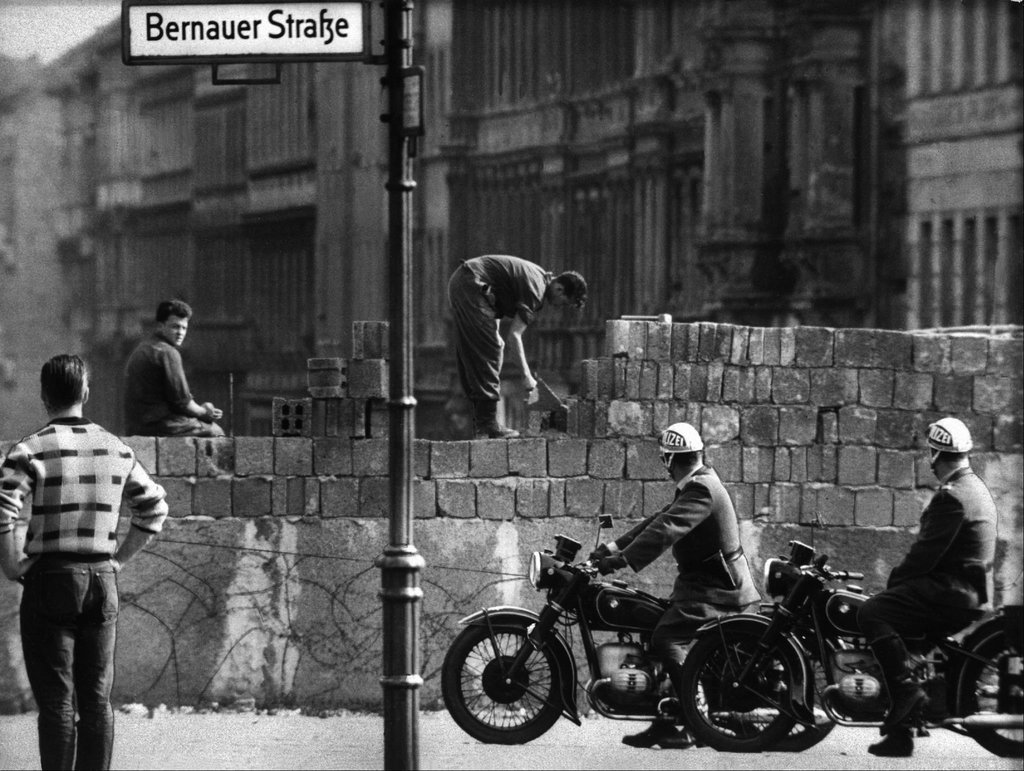
The Berlin Wall not only divided families and friends but also became a potent symbol of Cold War division. While West Berliners enjoyed relative freedom and prosperity, East Berliners lived under stringent restrictions and surveillance by the Stasi. Despite the oppressive environment, numerous daring escape attempts were made, some successful and many tragic. The Wall stood as a constant reminder of the broader struggle between democracy and communism.
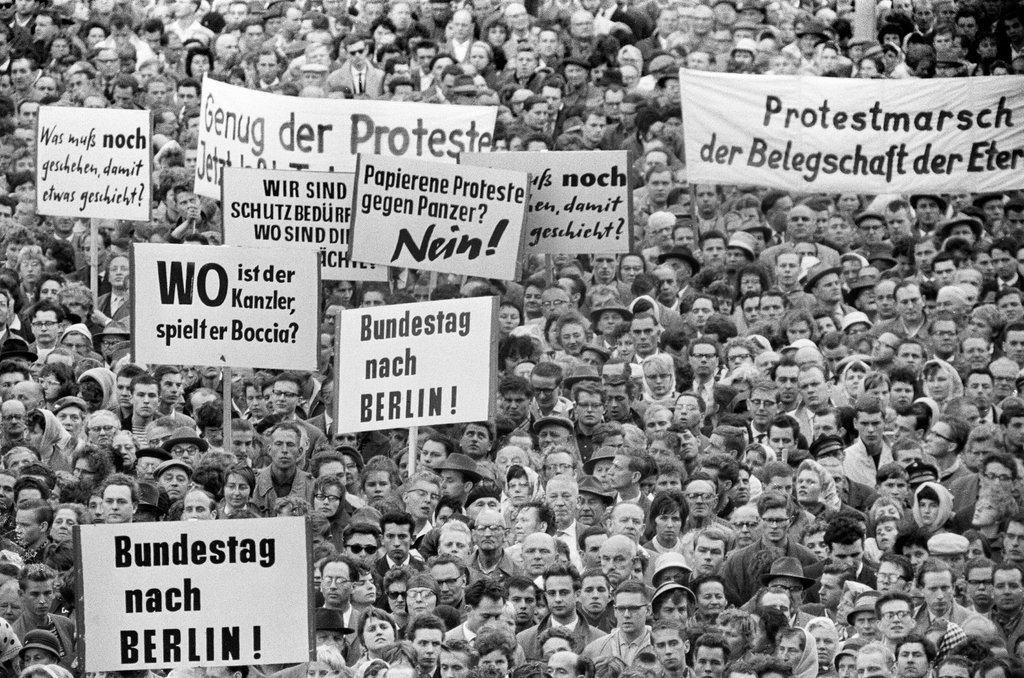
The 1980s brought significant changes. The Soviet Union, under Mikhail Gorbachev, implemented policies of glasnost (openness) and perestroika (restructuring), leading to a relaxation of Soviet control over Eastern Europe. In East Germany, mounting public unrest and a desire for greater freedom culminated in mass protests. On November 9, 1989, amid mounting pressure and confusion over a new travel policy, East German authorities opened the border. Jubilant crowds from both sides converged on the Wall, leading to its spontaneous dismantling. The fall of the Berlin Wall marked the beginning of the end for the GDR and paved the way for German reunification in 1990.
The Berlin Wall remains one of the most enduring symbols of the Cold War era. It represents not only the physical and ideological divide of a city and a nation but also the broader struggle for freedom and unity in the face of oppression. Its fall is celebrated as a triumph of the human spirit. The Wall's legacy is preserved through artifacts and memorials. Fragments of the Wall are displayed globally, symbolizing hope and resilience. In Berlin, sections of the Wall, like the East Side Gallery, have been transformed into vibrant open-air art galleries, inspiring artists worldwide. The Berlin Wall Memorial at Bernauer Strasse offers a comprehensive historical account, including original remnants and border fortifications. Objects associated with the Wall, from guard towers to personal items of escapees, are exhibited in museums, connecting people to stories of courage and hardship. The Wall's story and its implications for freedom and human rights continue to inspire educational initiatives, documentaries, books, and films, ensuring that the lessons of this pivotal period in history are not forgotten.


Items

Since the domain that we have decided to study has such a wide possibilities of interpretations the items chosen had to reflect this aspect. We have collected 10 items that connect to the Berlin Wall in many different ways.
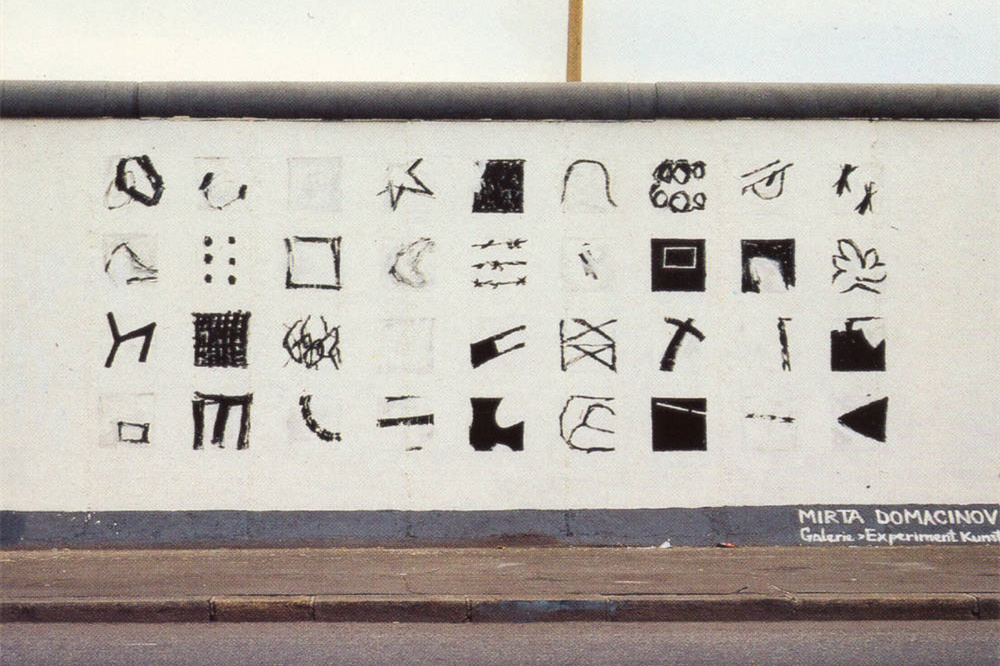
Characters in the row

A postcard from 1991, height 10cm width 15cm, with part of a wall containing graffiti.

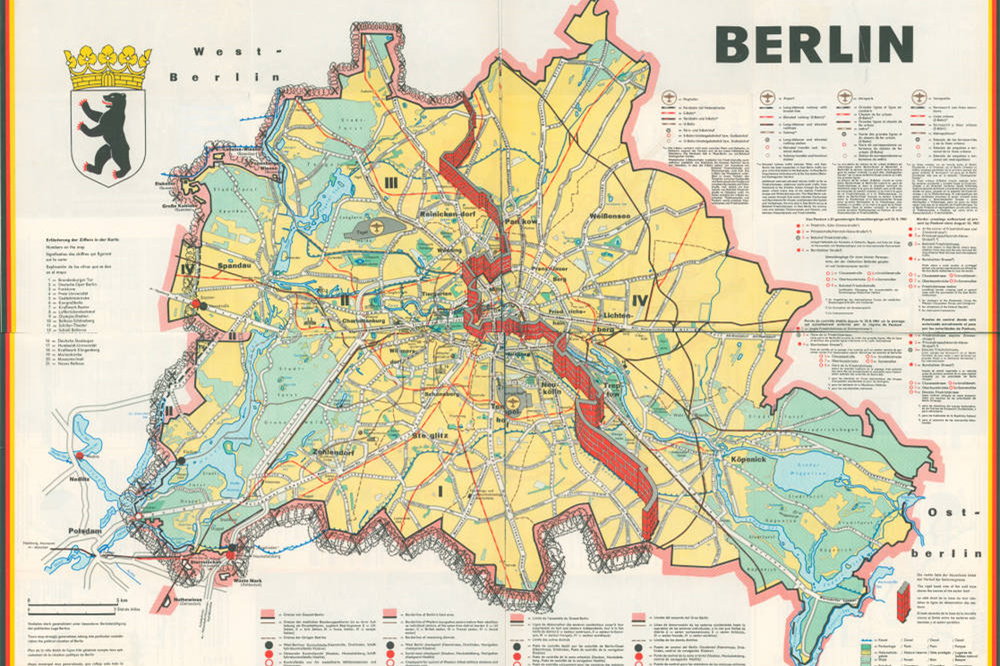
Map of Germany with occupation zone and former eastern territories

A paper map by 60.3cm high and 83.8cm wide.

Heroes - David Bowie

In 1987, David Bowie played a concert near the Reichstag in West Berlin, a stone’s throw away from the Berlin Wall. It was a concert that many Berliners of the border believe helped harden people’s resolve to bring down the hated barrier that had kept families apart for forty years.
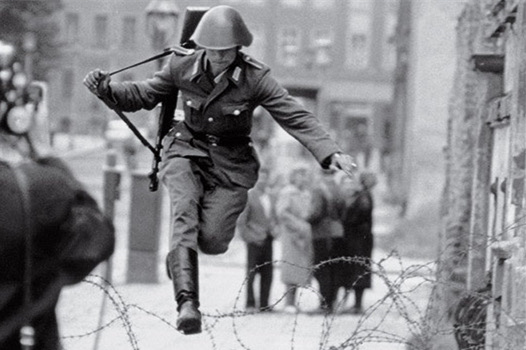
Leap into freedom

This East German soldier, whose leap over a barbed wire barricade between East and West Berlin symbolized the repressions of the Berlin Wall, never was named. Now, two years later, he has been identified and traced to a village in West Germany where he lives with his wife and 11-month-old son.
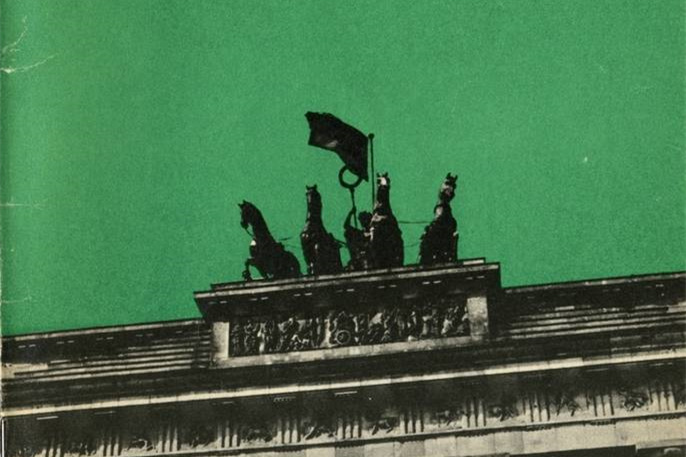
Brochure "A Wall of Peace"

Brochure “A Wall of Peace”, published by the Political Administration of the Berlin City Command with articles on the correctness and significance of the “anti-fascist protective wall” for socialism in the GDR, 64 pages.
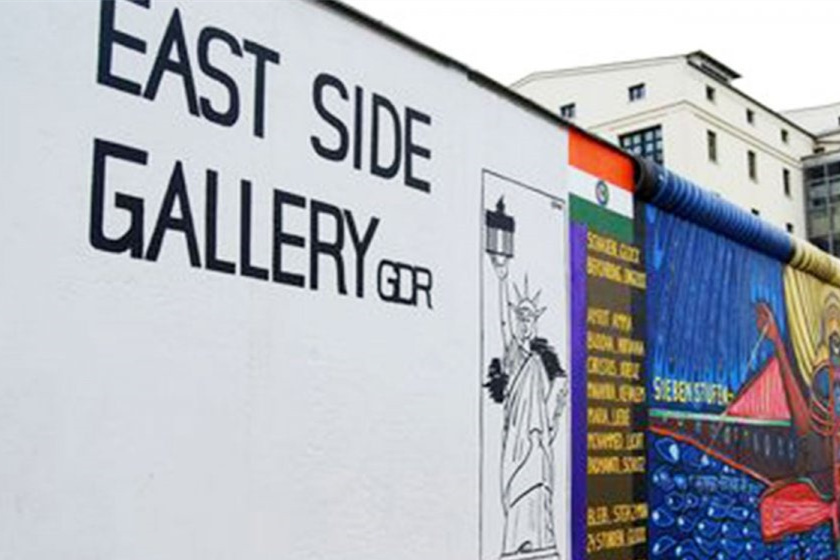
East Side Gallery

The East Side Gallery memorial in Berlin is a permanent open-air gallery on the longest surviving section of the Berlin Wall in Mühlenstraße between the Berlin Ostbahnhof and the Oberbaumbrücke along the Spree.
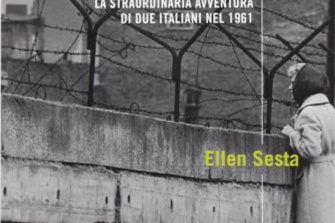
Il Tunnel Della Libertà

Domenico Sesta, in 1961, a few days after the construction of the Berlin Wall, with his friend Gigi began digging a tunnel to connect East and West by eluding the GDR border guards.
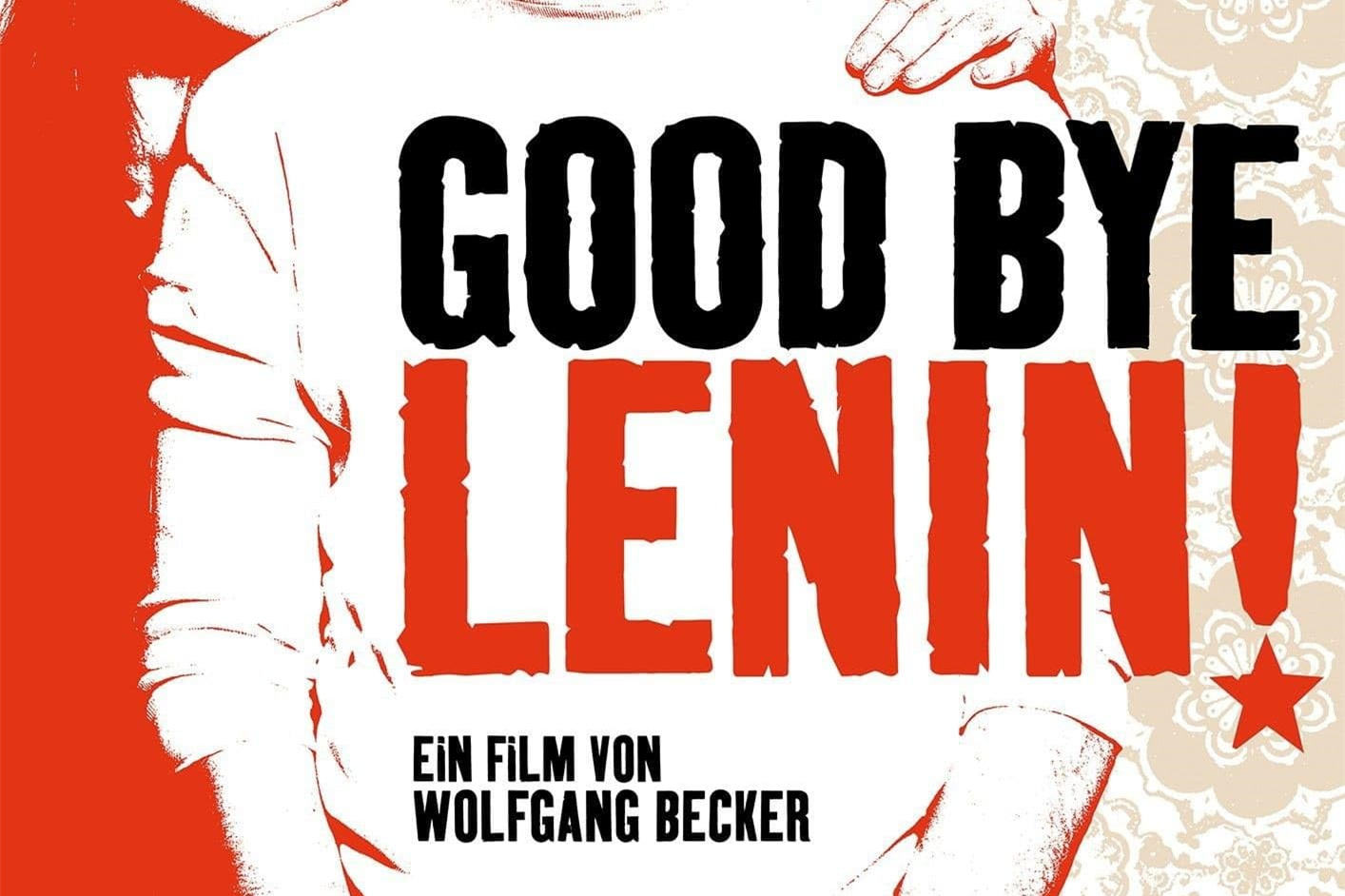
Goodbye Lenin!

In 1990, to protect his fragile mother from a fatal shock after a long coma, a young man must keep her from learning that her beloved nation of East Germany as she knew it has disappeared.

Tear Down This Wall!

Photocopy of the speech copy which Ronald Reagan utilized when he spoke at Berlin's Brandenburg Gate in June 1987. Speech is known for the quote, "Mr. Gorbachev, open this gate. Mr. Gorbachev, tear down this wall."

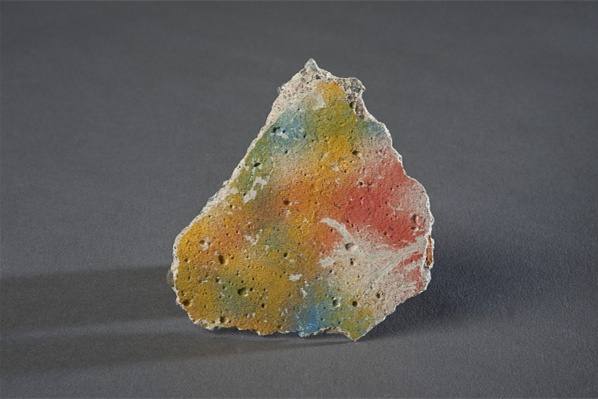
Berlin Wall Fragment

When the end came, portions of the wall were cut into memorial-size chunks of concrete. An apparently limitless supply of smaller bits became available to a global audience who had witnessed the wall’s destruction on television.

Knowledge Organization

Once a domain of study and 10 items characterizing it have been selected, all sourced from various types of institutions such as libraries, archives, museums, and databases, the first step in analyzing them is the Knowledge Organization Process. Through this process, the acquired data are described and represented through models, reflecting different levels of abstraction.


Conceptual Map

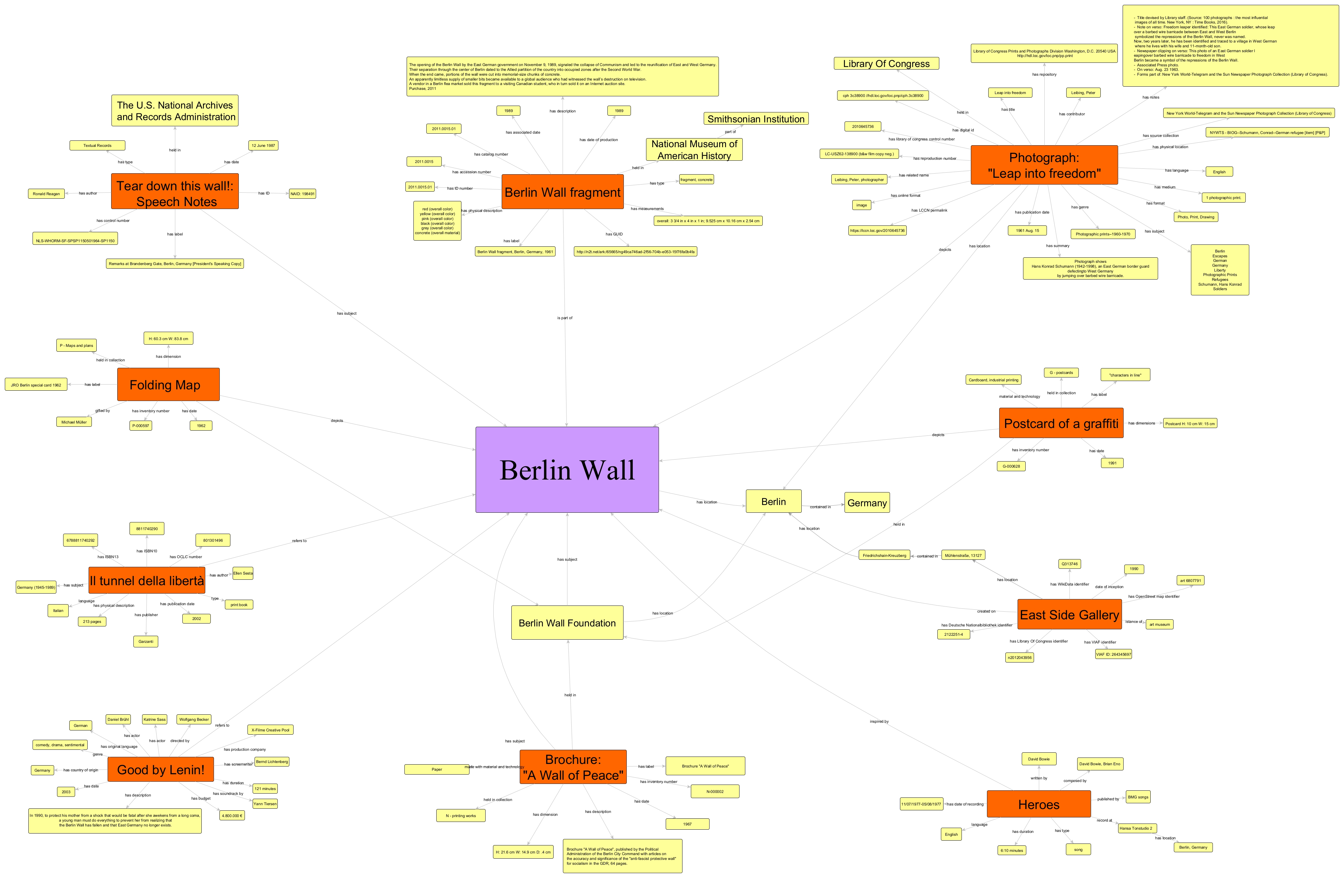
The Conceptual Map is the first step that allows to start highlighting the relationships between these items and the core concept using natural language.


E/R Model

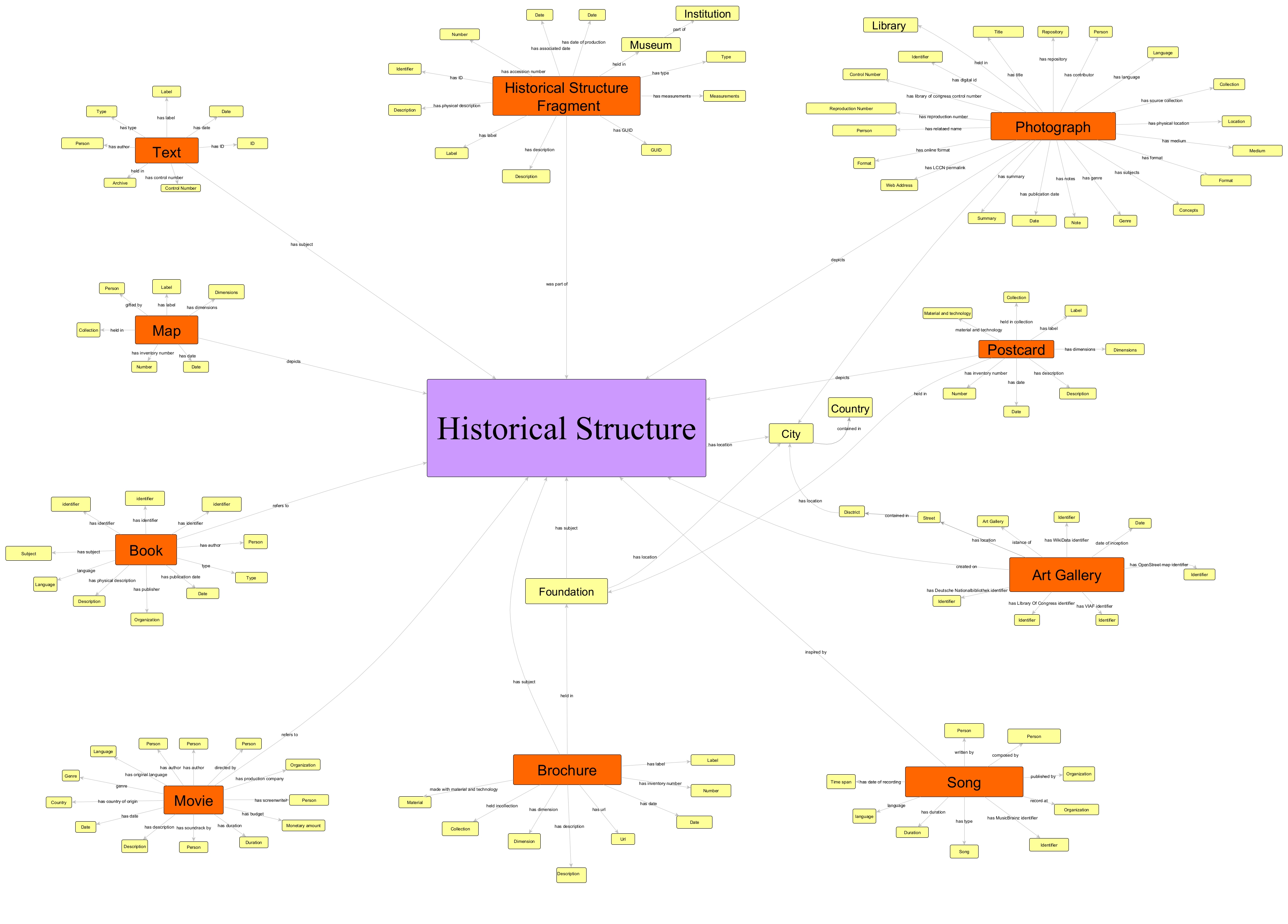
After creating the Conceptual Map it is then translated into an E/R Model, which allows for a more abstract view of the data by rendering people, places, dates and subjects as Entities and their connections as Relationships.


Metadata Analysis

The next step involves revisiting the institutions and providers of the items to better analyze the metadata used for their description. Some institutions clearly stated the standards they applied while others followed internal standards that were not specified. For those without a clear declaration, we applied either the most common standard generally used by that type of institution or a more generic metadata standard deemed suitable for the provider.

Item Item Type Provider Metadata Standard
Reagan's speech notes: Tear down this wall! Text The U.S. National Archives and Records Administration LCDRG
Folding map Map Stiftung Berliner Maue LIDO
Heroes Song MusicBrainz MusicBrainz Terminology
East Side Gallery Museum Wikidata schema.org
Brochure: A Wall of Peace Brochure Stiftung Berliner Mauer LIDO
Photograph: Leap into freedom Photograph Library of Congress MODS
Il tunnel della libertà Book WorldCat ISBD
Postcard of a graffiti Postcard Stiftung Berliner Mauer LIDO
Goodbye Lenin! Movie IMDb schema.org
Berlin Wall fragment Historical Structure Fragment National Museum of American History CCO


Metadata Alignment

Once defined the different standards,the next step was to compare (if possible) how those different standards expressed similar concepts.

WHO

Property LCDRG Schema.org MODS LIDO CCO ISBD MusicBrainz Terminology
Contributor Personal Contributor
Personal Contributor Type
contributor <name> / <role> / <roleTerm> <eventWrap> / <eventSet> / <event> / <eventType> / <eventActor> / <role> Creator Display, Creator Extent Statement of responsibility autore, arrangiatore, fondatore
Creator Creating individual creator <name> <namePart> <eventWrap> / <eventSet> / <event> / <eventType> / <eventActor> / <role> Role Statement of responsibility collaborazione

WHAT

Property LCDRG Schema.org MODS LIDO CCO ISBD MusicBrainz Terminology
Description Object Description description </mods:
abstract>
<object
Description
Wrap> / <objectDescriptionSet> / <descriptiveNoteValue> / <xs:string>
Description Extent N/A
Format Format fileFormat </mods:form> <object
Measurements
Wrap> / <objectMeasurementsSet> / <objectMeasurements> / <formatMeasurements>
Format Extent Formato
Physical Description Object Description description </mods:physical
Description>
<object
Measurements
Wrap> / <object
Measurements
Set> / <objectMeasurements>
Physical Description display Dimensions Formato, Confezione
Identifier Collection Identifier identifier </mods:
identifier>
<recordWrap> / <recordID> / <xs:string> Unique ID Resource identifier N° di catalogo
Type Object Type type </mods:typeOf
Resource>
<object
WorkTypeWrap> / <object
WorkType>
Work Type Media Type Tipo
Title Title name </mods:
titleInfo>
<titleWrap> / <titleSet> / <appellationValue> / xs:string Title Title Titolo
Language Language inLanguage </mods:
languageTerm>
xml:lang N/A N/A Lingua

WHEN

Property LCDRG Schema.org MODS LIDO CCO ISBD MusicBrainz Terminology
Production Date Production Date production
Date
<dateCreated> <eventWrap> / <eventSet> / <event> / <eventType> / <eventDate> Display date Date of publication, production and/or distribution registrazione di
Associated Date N/A Date <date> <eventWrap> / <eventSet> / <event> / <eventType> / <eventDate> N/A Date of printing or manufacture Data, Eventi di pubblicazione
Publication Date Release Date datePublished <dateIssued> <eventWrap> / <eventSet> / <event> / <eventType> / <eventDate> N/A Date of publication, production and/or distribution Data, Eventi di pubblicazione

WHERE

Property LCDRG Schema.org MODS LIDO CCO ISBD MusicBrainz Terminology
Location Location Facility location </mods:
physical
Location>
<repository
Wrap> / <repositorySet> / <repositoryLocation>
Current Location Place of printing or manufacture Paese
Creation/
Publication Location
Creating Organization location
Created
</mods:place> <eventWrap> / <eventSet> / <event> / <eventPlace> / <place> Creation Location place of publication, production, and/or distribution registrata presso
Collection/Part Of Collection Identifier isPartOf </mods:
relatedItem>
<recordWrap> / <collection> Current Location display Title proper of a series or multipart monographic resource Titolo della pubblicazione
Depicted Location content
Location
</mods:
geographic>
<subjectWrap> / <subjectSet> / <subject> / <subjectPlace> Subject N/A N/A


Theoretical Model

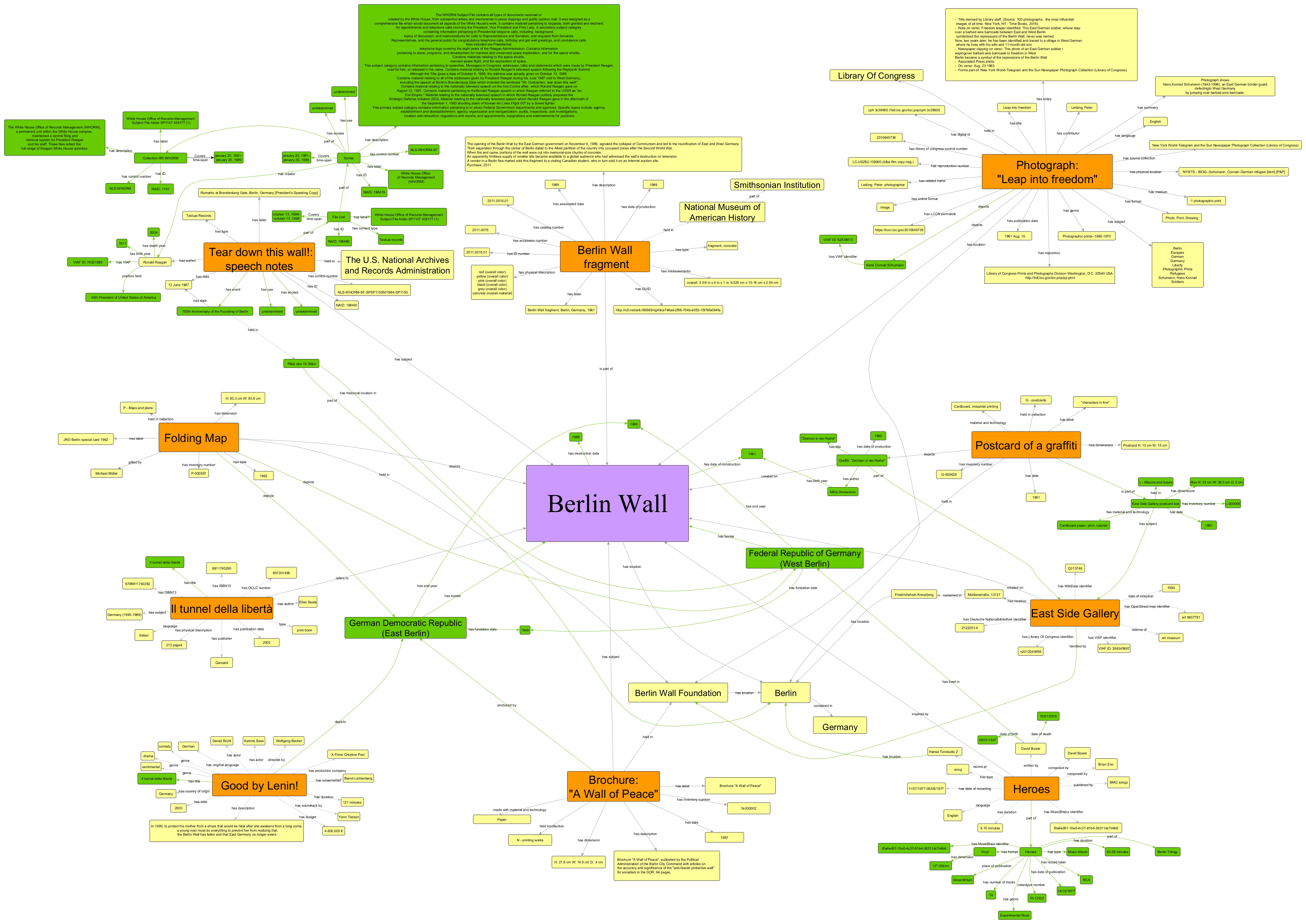
In the Theoretical Model the additional Data found on the Web about people, places, events, dates and other information related to the 10 objects chosen is displayed using natural language.


Enhanced E/R Model

As for the E/R model derived from the Conceptual Map, here, the goal of the model is to gather an abstraction of the Theoretical Model using a Entity/Relationships approach.


Conceptual Model

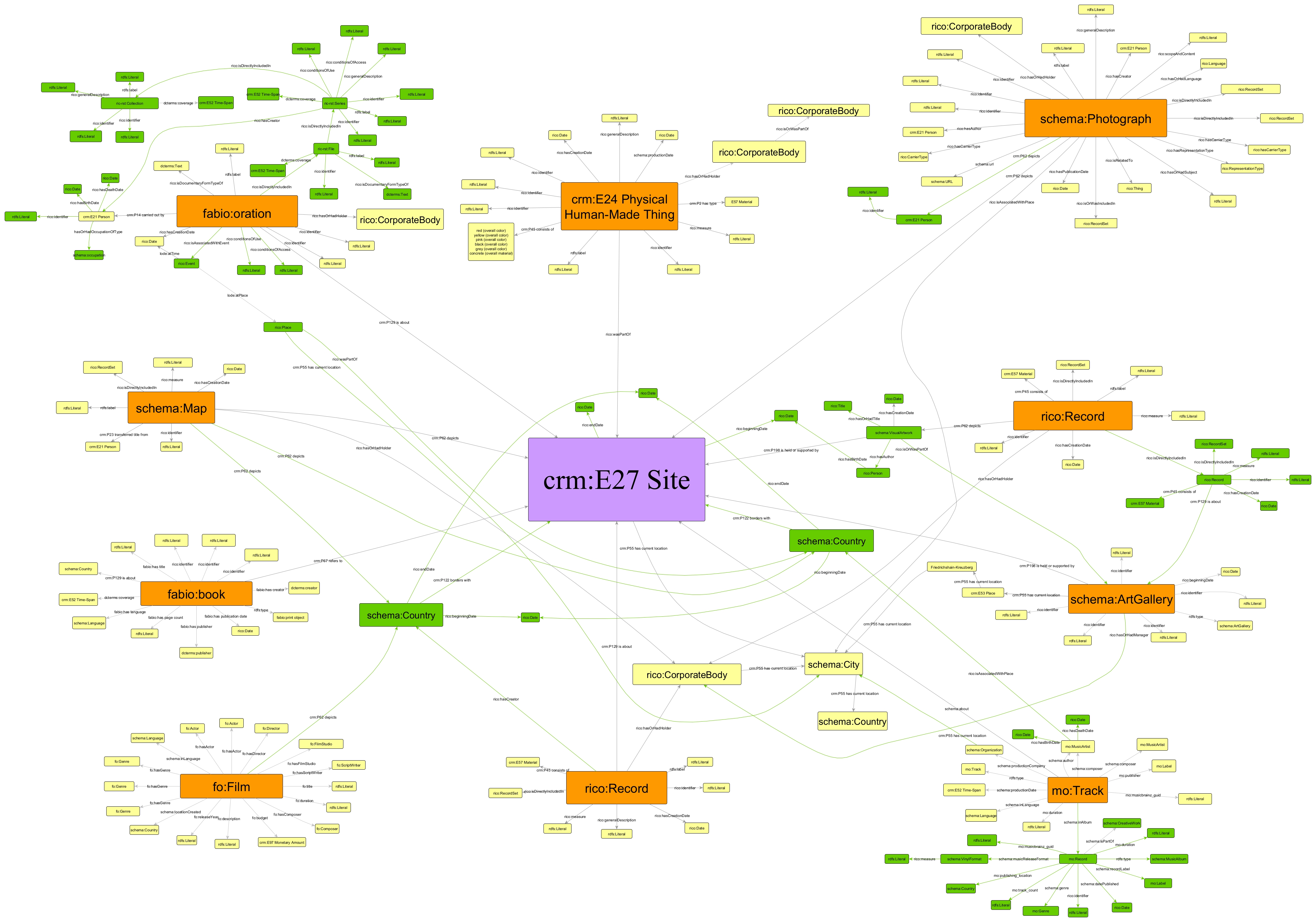
In this model the goal is to provide an even more abstract view of the items and their connection between them and to the core concept. Here an ontological approach is followed and the subjects/concepts and relationships depicted in the theoretical model are refactored according to the most suitable classes and properties found in already existing ontologies.


Knowledge Representation

With the data fully described, data modeling is complete. We can now move on to the next step: knowledge representation, where new semantic data is produced.


Items Description


In this stage each item is described as the collection of its relationships, specifically the structure follows the Subject-Predicate-Object format where the Predicates are expressed as in the Conceptual Model with the use of Ontologies while Subject and Objects using natural language. Please download the CSV files here!

Postcard

Subject Property Object
Postcard of a graffiti rico:isDirectlyIncludedIn G - postcards
Postcard of a graffiti rdfs:label characters in line
Postcard of a graffiti rico:measure H: 10 cm W: 15 cm
Postcard of a graffiti rico:hasCreationDate 1991
Postcard of a graffiti rico:identifier G-000628
Postcard of a graffiti crm:P62 depicts Graffiti: Zeichen in der Reihe
Postcard of a graffiti crm:P45 consists of Cardboard; industrial printing
Postcard of a graffiti rico:isDirectlyIncludedIn East Side Gallery postacard box
Postcard of a graffiti rico:hasOrHadHolder Berlin Wall Foundation

Map

Subject Property Object
Folding Map rico:measure H: 60.3 cm W: 83.8 cm
Folding Map rico:isDirectlyIncludedIn P - Maps and plans
Folding Map rdfs:label JRO Berlin special card 1962
Folding Map crm:P23 transferred title from Michael Müller
Folding Map rico:identifier P-000597
Folding Map rico:hasCreationDate 1962
Folding Map crm:P62 depicts Berlin Wall
Folding Map rico:hasOrHadHolder Berlin Wall Foundation
Folding Map crm:P62 depicts German Democratic Republic (East Berlin)
Folding Map crm:P62 depicts Federal Republic of Germany (West Berlin)

Song

Subject Property Object
Heroes mo:duration 6.10 minutes
Heroes schema:inLanguage English
Heroes schema:productionDate 11/07/1977-05/08/1977
Heroes rdfs:type song
Heroes schema:productionCompany Hansa Tonstudio 2
Heroes schema:author David Bowie
Heroes schema:composer David Bowie
Heroes schema:composer Brian Eno
Heroes mo:publisher BMG songs
Heroes mo:musicbrainz_guid f0a4ed57-10e0-4c37-81b4-36311dc7d4b6
Heroes schema:inAlbum Heroes
Heroes schema:about Berlin Wall

Photo

Subject Property Object
Photograph: Leap into freedom rico:generalDescription "Title devised by Library staff. (Source: 100 photographs : the most influential images of all time. New York, NY : Time Books, 2016). Note on verso: Freedom leaper identified: This East German soldier, whose leap over a barbed wire barricade between East and West Berlin symbolized the repressions of the Berlin Wall, never was named. Now, two years later, he has been identified and traced to a village in West Germany where he lives with his wife and 11-month-old son. Newspaper clipping on verso: This photo of an East German soldier leaping over barbed wire barricade to freedom in West Berlin became a symbol of the repressions of the Berlin Wall. Associated Press photo. On verso: Aug. 23 1963. Forms part of: New York World-Telegram and the Sun Newspaper Photograph Collection (Library of Congress)."
Photograph: Leap into freedom rico:hasCreator "Leibing, Peter"
Photograph: Leap into freedom rico:isAssociatedWithPlace "Berlin, Germany"
Photograph: Leap into freedom rico:hasOrHadLanguage English
Photograph: Leap into freedom rico:isDirectlyIncludedIn New York World-Telegram and the Sun Newspaper Photograph Collection (Library of Congress)
Photograph: Leap into freedom rico:isDirectlyIncludedIn "NYWTS - BIOG--Schumann, Conrad--German refugee [item] [P&P]"
Photograph: Leap into freedom rico:hasCarrierType 1 photographic print.
Photograph: Leap into freedom rico:hasRepresentationType "Photo, Print, Drawing"
Photograph: Leap into freedom rico:hasOrHadSubject "Berlin Escapes German Germany Liberty Photographic Prints Refugees Schumann, Hans KonradSoldiers"
Photograph: Leap into freedom rico:isRelatedTo Photographic prints--1960-1970
Photograph: Leap into freedom rico:isOrWasIncludedIn "Library of Congress Prints and Photographs Division Washington, D.C. 20540 USA http://hdl.loc.gov/loc.pnp/pp.print"
Photograph: Leap into freedom rico:hasPublicationDate 1961 Aug. 15
Photograph: Leap into freedom crm:P62 depicts Berlin Wall
Photograph: Leap into freedom rico:scopeAndContent "Photograph shows Hans Konrad Schumann (1942-1998), an East German border guard defectingto West Germany by jumping over barbed wire barricade."
Photograph: Leap into freedom schema:url https://lccn.loc.gov/2010645736
Photograph: Leap into freedom rico:hasCarrierType image
Photograph: Leap into freedom rico:hasAuthor "Leibing, Peter, photographer"
Photograph: Leap into freedom rico:identifier LC-USZ62-138900 (b&w film copy neg.)
Photograph: Leap into freedom rico:identifier 2010645736
Photograph: Leap into freedom rico:identifier cph 3c38900 //hdl.loc.gov/loc.pnp/cph.3c38900
Photograph: Leap into freedom rdfs:label Leap into freedom
Photograph: Leap into freedom crm:P62 depicts Hans Conrad Schumann
Photograph: Leap into freedom rico:hasOrHadHolder Library of Congress

Brochure

Subject Property Object
Brochure A Wall of Peace rico:measure H: 21.6 cm W: 14.9 cm D: .4 cm
Brochure A Wall of Peace rico:hasOrHadHolder Berlin Wall Foundation
Brochure A Wall of Peace rico:isDirectlyIncludedIn N-printing works
Brochure A Wall of Peace rico:identifier N-000002
Brochure A Wall of Peace rico:hasCreationDate 1967
Brochure A Wall of Peace rico:generalDescription "Brochure A Wall of Peace, published by the Political Administration of the Berlin City Command with articles on the accuracy and significance of the 'anti-fascist protective wall' for socialism in the GDR, 64 pages."
Brochure A Wall of Peace rdfs:label Brochure A Wall of Peace
Brochure A Wall of Peace rico:hasCreator German Democratic Republic(East Berlin)
Brochure A Wall of Peace crm:P129 is about Berlin Wall
Brochure A Wall of Peace crm:P45 consists of Paper

Gallery

Subject Property Object
East Side Gallery schema:location Friedrichshain-Kreuzberg
East Side Gallery crm:P55 has current location "Mühlenstraße, 13127"
East Side Gallery rico:identifier n2012043956
East Side Gallery rico:identifier 2122251-4
East Side Gallery rico:identifier Q313746
East Side Gallery rico:identifier art 6807791
East Side Gallery rico:identifier VIAF ID: 264345697
East Side Gallery rico:beginningDate 1990
East Side Gallery crm:P198 is held or supported by Berlin Wall
East Side Gallery rdfs:type art museum

Book

Subject Property Object
Il tunnel della libertà rico:identifier 8811740290
Il tunnel della libertà rico:identifier 801301496
Il tunnel della libertà fabio:has creator Ellen Sesta
Il tunnel della libertà rdfs:type print book
Il tunnel della libertà fabio:has publication date 2002
Il tunnel della libertà fabio:has publisher Garzanti
Il tunnel della libertà fabio:has page count 213 pages
Il tunnel della libertà fabio:has language Italian
Il tunnel della libertà dcterms:coverage Germany (1945-1989)
Il tunnel della libertà rico:identifier 6788811740292
Il tunnel della libertà crm:P129 is about Berlin Wall

Film

Subject Property Object
Goodbye Lenin! fo:hasDirector Wolfgang Becker
Goodbye Lenin! fo:hasActor Katrine Sass
Goodbye Lenin! fo:hasActor Daniel Brühl
Goodbye Lenin! schema:inLanguage German
Goodbye Lenin! fo:hasGenre Comedy
Goodbye Lenin! fo:hasGenre Drama
Goodbye Lenin! fo:hasGenre Sentimental
Goodbye Lenin! schema:locationCreated Germany
Goodbye Lenin! fo:releaseYear 2003
Goodbye Lenin! fo:description "In 1990, to protect his mother from a shock that would be fatal after she awekens from a long coma, a young man must do everything to prevent her from realizing that the Berlin Wall has fallen and that East Germany no longer exists."
Goodbye Lenin! fo:budget 4.800.000€
Goodbye Lenin! fo:hasComposer Yan Tiersen
Goodbye Lenin! fo:duration 121 minutes
Goodbye Lenin! fo:title "Good Bye, Lenin!"
Goodbye Lenin! fo:hasScriptWriter Bernd Lichtenberg
Goodbye Lenin! fo:hasFilmStudio X-Filme Creative Pool
Goodbye Lenin! crm:P62 depicts Berlin Wall

Speech

Subject Property Object
Tear Down This Wall!: speech Notes rdfs:label "Remarks at Brandenberg Gate, Berlin, Germany [President's Speaking Copy]"
Tear Down This Wall!: speech Notes rico:isDocumentaryFormTypeOf Textual Records
Tear Down This Wall!: speech Notes crm:P14 carried out by Ronald Reagan
Tear Down This Wall!: speech Notes rico:hasCreationDate 12 June 1987
Tear Down This Wall!: speech Notes rico:isAssociatedWithEvent 750th Anniversary of the Founding of Berlin
Tear Down This Wall!: speech Notes rico:conditionsOfUse undetermined
Tear Down This Wall!: speech Notes rico:conditionsOfAccess undetermined
Tear Down This Wall!: speech Notes crm:P129 is about Berlin Wall
Tear Down This Wall!: speech Notes rico:identifier NAID: 198491
Tear Down This Wall!: speech Notes rico:identifier NLS-WHORM-SF-SPSP1150501964-SP1150
Tear Down This Wall!: speech Notes rico:hasOrHadHolder The U.S. National Archives and Records Administration
Tear Down This Wall!: speech Notes rico:isDirectlyIncludedIn File Unit

Fragment

Subject Property Object
Berlin Wall fragment rico:generalDescription "The opening of the Berlin Wall by the East German government on November 9, 1989, signaled the collapse of Communism and led to the reunification of East and West Germany. Their separation through the center of Berlin dated to the Allied partition of the country into occupied zones after the Second World War. When the end came, portions of the wall were cut into memorial-size chunks of concrete. An apparently limitless supply of smaller bits became available to a global audience who had witnessed the wall’s destruction on television. A vendor in a Berlin flea market sold this fragment to a visiting Canadian student, who in turn sold it on an Internet auction site. Purchase, 2011"
Berlin Wall fragment rico:hasCreationDate 1989
Berlin Wall fragment rico:identifier 2011.0015.01
Berlin Wall fragment rico:identifier 2011.0015
Berlin Wall fragment rico:identifier 2011.0015.01
Berlin Wall fragment crm:P45 consists of "red (overall color) yellow (overall color) pink (overall color) black (overall color) grey (overall color) concrete (overall material)"
Berlin Wall fragment rdfs:label "Berlin Wall fragment, Berlin, Germany, 1961"
Berlin Wall fragment rico:identifier "http://n2t.net/ark:/65665/ng49ca746ad-2f56-704b-e053-15f76fa0b4fa"
Berlin Wall fragment rico:measure "overall: 3 3/4 in x 4 in x 1 in; 9.525 cm x 10.16 cm x 2.54 cm"
Berlin Wall fragment crm:P2 has type "fragment, concrete"
Berlin Wall fragment rico:hasOrHadHolder National Museum of American History
Berlin Wall fragment schema:productionDate 1989
Berlin Wall fragment rico:wasPartOf Berlin Wall


RDF Production

The first step was to mint URIs for the entities of our models by applying a python script on the CSV files of the items. Once the URIs were created the CSV files containing the triples were transformed into Turtle format in order to create the RDF dataset.

If you want to download the turtle file for the items, please click here!


RDF Visualization

First, URIs were created to describe key entities within these items. Ontology prefixes were then declared, and triples were written in Turtle serialization. These triples highlight relationships between the items and their entities, linking them to relevant external resources where possible.


Text Processing

The speech notes were encoded in XML/TEI to describe their structure and main entities cited in them. Then the XML/TEI file was tranformed in a HTML file using a python script. Finally the XML/TEI was transformed in a RDF dataset. Follow the python scripts used and the links to download the files mentioned.
At this stage we worked on the Raegan Speech and encodend it in XML/TEI, after the encoding we used a python script to transform it into HTML and, finally, another script to transform it into an RDF format

XML/TEI document please click here!
HTML file please click here!
XSLT file used to do the HTML transformation please click here!
RDF file please click here!
TEI to RDF Python file please click here!
XML to HTML Python file please click here!


Collaborators